Sunday, April 17, 2016

Assessment


“We are teaching kids to be literate so they can have success in college and future careers. We are teaching kids to be literate so they can feel good about themselves so that they can love reading, so they can identify as readers and writers, so they can understand themselves better, so they can understand other people better. That is the big purpose here. The purpose is not to teach kids how to pass tests.  We are doing something more important than just teaching kids how to pass a test.”
The above quote was mentioned in the video Leading a Balanced Literacy Assessment and I think as Reading Specialists, it is important to that to make sure students are learning what we are teaching them. In order to know that students are learning what we are teaching them, we need to know that assessments should not be given for students to just pass a test. They should be given to students to test how they will react to the outside world and how they would test their experiences in the outside world. Assessments should not be given to students to just pass a test to test their knowledge of something they read in a textbook. Tests are to be given to students based on their own experiences from the texts they read. This is why teachers should allow students to choose their own books to read once in a while because when students are interested in something they like, they can connect it to their own experiences and when it is time to be tested on it they do well because they have connections with it.

There are several different ways to implement effective and meaningful assessments in an effort to improve student achievement other than just assigning a test. Teachers can assess their students to improve student achievement through teacher observation and questioning, performance assessments, and diagnostic assessments. Students are assessed through their experiences from learning and being in the classroom learning environment. “Without assessments that are sensitive to the contributions of each component to overall reading ability, teachers will not be able to target their instruction to the skills and strategies most in need of improvement” (page 27). Teachers need assessments to find out where their students are excelling at and where they are struggling. In order for that to happen, teachers need to use the right assessments and the ones mentioned in the articles are on the path to the right direction, but I think and research also indicates that they are still things we do not know and other assessments that can be used, but we may not know about them yet.    


In the video, there are also several questions that should be answered and that will help implement effective and meaningful assessments in an effort to improve student achievement. The questions are as follows:
  • 1      How much time is spent on literacy assessment?
  • 2.      What redundancies are included in your system?
  • 3.      How much variety is included in your assessment system?
  • 4.      What data is used for curriculum decisions?
  • 5.      What data is used for individual student decisions?
  • 6.   How are assessment results communicated with students and families?


References

Leading a balanced literacy assessment system: Conducting a literacy assessment review. (2015). Retrieved April 15, 2016, from https://www.youtube.com/watch?v-uruFu6f-kg0

National Institute for Literacy. (2007). What Content-Area Teachers Should Know About Adolescent   Literacy.


Sunday, March 20, 2016

Writing in the Content Areas

                                                   
“Teachers and researchers understand that fluency is an important consideration in reading development but sometimes neglect writing fluency. If students do not write enough, they do not have anything to edit. Because writing is thinking, if students are not writing fluently, they probably are not thinking fluently” (Fisher & Frey, 2013, page 97).
            Writing is the best way to get our thoughts down on paper. It is an expression of our feelings that we cannot find the right words to speak, but the right words to write on paper. Just as the above quote mentions from the article, A Range of Writing Across the Content Areas, if we are not writing fluently then we are not thinking fluently. In most English classes, teachers assign their students to do some light writing usually at the beginning of class, during homeroom, or at the end of class. Writing, like this, should not only be included in English classes, but in the content areas as well. I really like the idea of power writing. “Power writing is a method for building writing fluency through brief, timed writing events. The purpose is to get students to put ideas down on paper quickly and accurately” (Fisher & Frey, 2013, page 97). Power writing could be done in any content area class such as social studies, science, or even math. As the man in the video mentions, teachers have to take some responsibility for integrating writing into their content area. Content area teachers can assign their students a journal writing activity in the first few minutes of class asking about a certain topic they had discussed in a previous class or jot down a few ideas about a certain issue within the subject. Timed writing events can have its positive effects and its negative effects. The positive side is that being timed will prepare students for timed SAT essay writing. The negative side is that students may feel overwhelmed with timed writing and may make them unable to write anything because nothing comes to mind, but writing in the content areas cannot only be done through journal writing. It can even include an essay writing assignment.
                                                           
            Writing could often times be very difficult for students. They may find it boring or they may have a writer’s block. So it is a teacher’s job to make writing fun and creative. Content area teachers have to make writing motivating and engaging. I think for teachers to be successful in writing they must always provide examples for their students and model for them. Students will not learn unless they learn from something first. Teachers should also provide one word on the board daily and students try to include that word in their journal writing. This will build their vocabulary and prepare them for SATs. I think to make writing engaging, students need to use their imagination and in order for students to use their imagination, teachers should assign creative writing projects. They should also write essays or journals that they have some connection with or which they can share their personal experiences within.
                                    
            In a content area class, a great strategy to use is the “language toolbox” from the detailed reading stage. “The language toolbox visually represented the way an author could choose and use language resources to write an academic-persuasive essay” (Ramos, 2014, page 660). In a social studies class, a history teacher can assign the class to write a persuasive essay that persuades the reader, for example, why the writer would make a good president. The writer could use the “language toolbox” as a great tool and resource for adding in adverbs, synonyms, and other language resources to prove the argument to be believable.
 There really is no wrong or right with writing. Writing can be done in two ways. You are either writing something based on personal experience and in your own opinion or you are writing something that is based on research. Writing should not be judged because it is spoken words written on paper. It is a stress-relief for the mind and I think all content area teachers should integrate writing into their lessons. Writing will always be seen in a content area class someway or somehow, whether it is through journal writing, essays, tests, or answering short answer questions. Writing is also an assessment for teachers to use on students to see if they comprehend what they are reading and to see if they grammatically speaking well because as mentioned before, “Writing is thinking and if students are not writing fluently, they are probably not thinking fluently” (Fisher & Frey, 2013, page 97). 
                                                             

References
Fisher, D., & Frey, N. (2013). A Range of Writing Across the Content Areas.
            Reading Teacher, 67(2), 96-101.

Ramos, K. (2014). Teaching Adolescent ELs to Write Academic-Style Persuasive
            Essays. Journal Of Adolescent & Adult Literacy, 57(8), 655-665.


Thursday, February 18, 2016

Module 2: Comprehension

                                             
“A major finding from our longitudinal study and our current research is that a student’s progress is unique to the individual and that we must pay constant attention to understanding learning at that level and in relation to specific contexts. To be consistent with our original intent to understand adolescent literacy from students’ perspectives, we must also ensure that we provide opportunities for students to discuss the manner in which the curriculum and pedagogy are affecting their learning” (McDonald, Thornley, Staley, & Moore, 2009, page 722).


The above quote stuck out to me the most when I read the article, The San Diego Striving Readers’ Project: Building Academic Success for Adolescent Readers. This article was about a research study on strengthening adolescent literacy. The study was done on students from New Zealand and some findings were from some San Diego schools. San Diego Unified school was using a literature-based literacy instructional approach for adolescents who were struggling in the content areas, so the research team used the approaches that New Zealand was using. What is so great about this study was that students were very outspoken about whether the approach was too challenging for them or if they were very successful at it. The literature-based literacy instructional approach became known as the Strategic Literacy Instruction in the Content Areas (SLIC) curriculum. Schools used this new curriculum across the content areas and grade-level appropriate texts were used for academic success because teacher-adapted texts were not very successful. “Our challenge is to teach students how to be successful using the very texts required for that success” (McDonald, Thornley, Staley, & Moore, 2009, page 721).
What is so important about this article and what I have learned most from it is that students will learn best when they read texts appropriate for their grade level. As teachers, we must always listen to the students’ needs first. If there literacy and comprehension is low, we must found out the answers from our students as to why they are struggling so much. The best quality of a teacher is listening to his or her students’ needs because they come first. As I read “The Iris Center” website, I learned a lot of similarities between the website and the article such as learning literacy across the content areas and how to come to understand a text when reading one. Students cannot understand a text if it is not on their reading level. They become successful when they understand a text. “Successful performance in subject areas depends on strong reading skills. A surprising number of middle- and high school students lack academic literacy skills and would benefit from explicit content-area reading instruction” (Iris.peabody.vanderbilt.edu, 2016).
What I also learned from “The Iris Center” website was that some teachers believe it is not required by them to teach literacy in the content areas. “Many content-area teachers believe that reading instruction is not their responsibility. They did not receive the relevant training and generally feel it is someone else’s role to teach reading skills” (Iris.peabody.vanderbilt.edu, 2016). However, I do believe that every teacher should be trained in literacy to teach in all content areas. A teacher may come across a word that students may not comprehend from a text and that teacher will need to teach the meaning of that word. For example, it is a science teacher’s responsibility to teach what atoms and molecules are in science class. Students should not learn that in a literacy course because that term is a scientific term that should only be taught and learned in a science classroom. 
Comprehension is so important and the key to students’ success. If a student did not comprehend what he or she was reading, they would never be able to learn from appropriate texts. So it is every teacher’s responsibility to monitor comprehension and to teach the meaning of words and texts if they are not comprehended.


References

          Iris.peabody.vanderbilt.edu, (2016). The iris center: Secondary reading instruction (part 1): Teaching vocabulary and comprehension in the content areas. (online) Available at: http://iris.peabody.vanderbilt.edu/module/sec-rdng/challenge/#content (Accessed February 18, 2016).

         McDonald, T., Thornley, C. Staley, R., & Moore, D. (2009). The san diego striving readers' project: Building academic success for adolescent readers. Journal of Adolescent and Adult Literacy, 52(8), 720 – 722.

Saturday, January 23, 2016

Literacy Autobiography

Reading was not always my strong point or my favorite when I was younger, but as the years went by and I got older I grew into liking, and then loving reading. When I was younger one of the first people to read to me was my mother. Although I cannot recall any memories of her reading to me, she told me she would always read to me and one of my favorites was Barney. She would always read me a Barney book before bedtime. 
           Now, my earliest memory of reading that I could recall was when I was in the second or third grade and I had to read chapter books and write book reports. Book reports were always fun for me to write because I love to write and once I start writing about something, it is usually hard for me to stop. However, one of my favorite books to read while growing up was the Nancy Drew series. I used to love reading these because they were filled with mystery and you never knew what was going to happen next. I think this is the moment when I started to like reading because I was reading something that interested me.      


          As I got a little older and did not have much choice in which books I could read, I grew to dislike reading a little bit. I remember reading the book Treasure Island in the sixth or eighth grade and I hated this book. It was difficult for me to understand. One of my greatest challenges at this time and leading up into my early years of high school was comprehending what I was reading. Reading books that I was not interested in or did not want to read made reading for me hard to comprehend and less enjoyable. I especially grew out of love with reading in high school when all I had to do was read for school and not for pleasure. I felt that I never had enough time to read on my own time because I was so busy reading articles, textbooks, and research for homework. I still felt this way in college as well until I got an iPad mini for my birthday one year, I believe it was around the time I was a freshman in college, and I started to read through iBooks on my iPad mini. This made reading so much more interesting and it was around this time that I started to appreciate reading more. I even started to read my favorite magazines through the iPad. The iPad mini was so much easier to carry around than a book or magazine so I carried it anywhere I went and popped it open any chance I got a spare minute to read.


When I was in middle school my favorite books to read were the Nancy Drew series. I loved mystery books, but then I grew into loving romance books and I still love them till this day. My favorite author is Nicholas Sparks. I love all of his books. Who does not love a good Nicholas Sparks book? I have read many of his books and not one of them has disappointed me. My favorite book of his is either between The Notebook, The Best of Me, and Nights in Rodanthe. Another awesome book is The Fault in Our Stars. I really enjoyed this book and the movie as well. 

       Now, as a preschool teacher, I am always reading aloud to my students and I love it. Reading children’s books are my favorite. One of my favorite children’s authors is Eric Carle. I love all his books and of course my favorite is The Very Hungry Caterpillar.
          Reading to my students is fun especially when I get to put enthusiasm into it and use different voices for each character. When I became a preschool teacher, I, then, decided that I wanted to go back to school for my Master’s in reading specialist because I was in the position of liking reading, to disliking it, and then loving it. 

           I had my ups and downs with reading, but I want to help children learn to love it so they do not lose their love for reading like I once did. I want to help struggling readers not give up, comprehend what they are reading, and appreciate it because almost anything that we read can be connected to our own lives in some way. That’s the way I look at reading. Reading is our life written on paper and I would love to keep reading as a life-long habit that never gets old. 


Thursday, November 5, 2015

Fantasy Books

Fantasy Books – Theme: Love
Love is a common theme among a lot of books, but there are different types of love. There is young love, vampire love (such as the Twilight series), elderly love, and family love. The three children’s fantasy books that I have chosen are all connected by love, but a love that is similar to a mother’s undying love for her child. We can relate to this kind of love, but the love in these books is expressed by raccoons, rabbits, and even…trees!


The Kissing Hand by Audrey Penn
“Whenever you feel lonely and need a little loving from home, just press your hand to your cheek and think, “Mommy loves you. Mommy loves you.”

This cute little story is about a small raccoon named Chester who is afraid to go to school, but is comforted and loved by his mother when she kisses his hand and calls it the kissing hand. She calls it this because wherever he will be she will be too because he carries her in the palm of his hand.


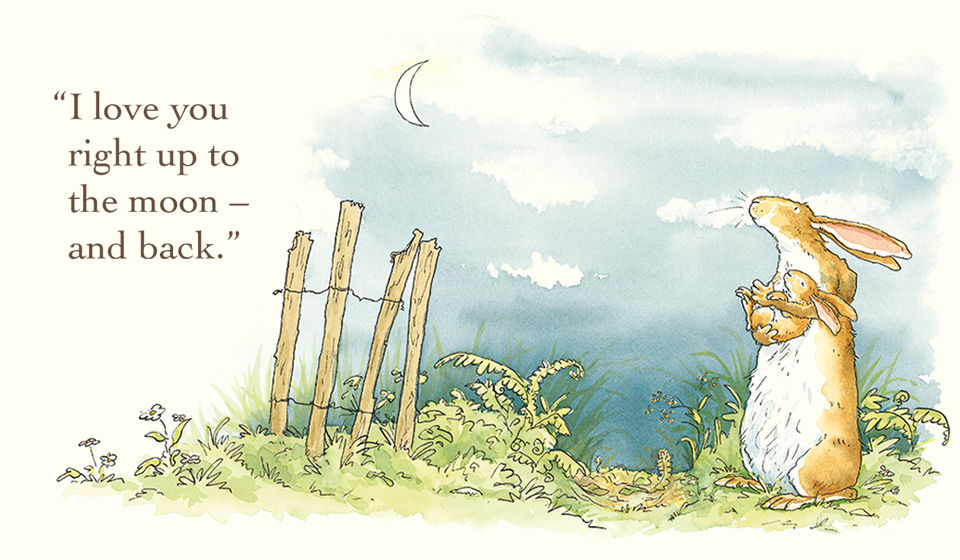
Guess How Much I Love You by Sam McBratney 
                  
“I love you right up to the moon – and back.”


This children’s book is about Big and Little Nutbrown Hare and how they show how much love they have for each other. The hares are viewed as father and son, but it is never mentioned in the story what their relationship is like. Any child could relate to this book when expressing their love for a family member.


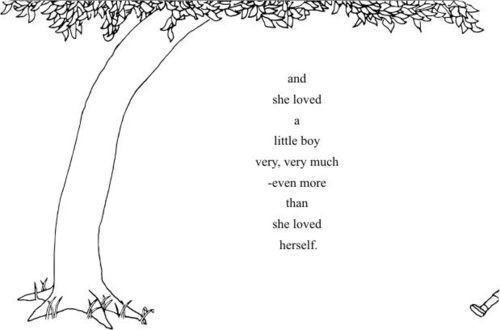
 The Giving Tree by Shel Silverstein
“and she loved a little boy very, very much – even more than she loved herself.”


This is one of my favorites and a classic! The Giving Tree is a wonderful story between a boy and tree that show endless love between each other. In the early stages of life, the boy plays with the tree, but as the boy gets older the boy wants and asks for more that the tree cannot provide but looks for other ways to get it for him. The tree never stops giving and is always happy to give to the boy. This story is similar to a mother’s or father’s bond to his or her child. A parent will never stop giving up to give what the child wants, whether it is food, money, fun playing, care, or…love.  

Tuesday, September 29, 2015

Reading Interest Survey


I teach Pre-K 3 so I do not have any students who know how to read books yet, but what I did for my reading interest survey is that I chose a student, who I will refer to as C.K. for confidentiality, in my class that rarely goes into the library center to read for play planning/learning centers. I chose this student because, to me, he does not seem to like to read because he never likes to go into the library and pick up a good book to read and when I read a book to the whole group, he tends to fig-it and want to play instead of learn and listen. So I did this survey on him to see what his interests are and what kind of books he may like. When I asked him if he likes the books that I read to the whole class in school, he said "Yes." When I asked him if mommy and daddy read to him at home he said "Yes." He like books with cows and he especially likes "Dumbo." His favorite sport to play is soccer and he likes books with dragons, dinosaurs, and trains and he really likes silly books. He likes to play in the park and he likes to go bike-riding. From what I gathered, I chose seven books that might spark his interest in going to read in the library center at school. 


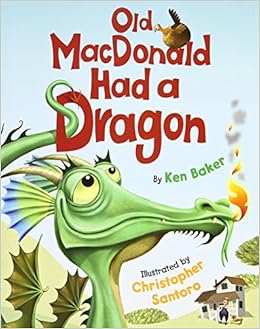
Baker, K. & Santoro, C. (2012). Old macdonald had a dragon. Las Vegas, NV: Amazon Children's Publishing. 

I chose this book for C.K. because he said that he likes to read about dragons and he likes cows, which are on a farm. So like the song "Old MacDonald Had a Farm," this book has similar meaning. This book is also on a Pre-K level.

                                          
Willems, M. (2012). Goldilocks and the three dinosaurs. New York: Balzer and Bray, an imprint of HarperCollinsPublishers. 

I chose this book because although it may be a little difficult to read on a preschool level, it includes dinosaurs and it is silly, similar to Goldilocks and the Three Bears

                   
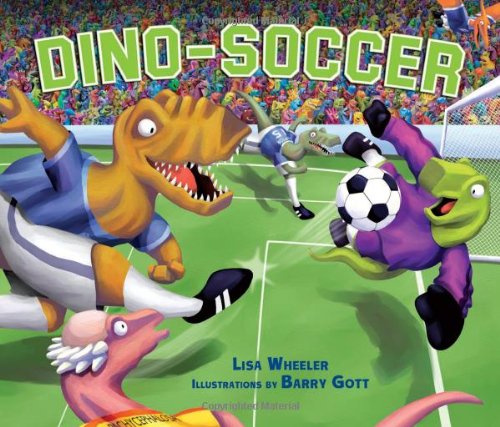
Wheeler, L. & Gott, B. (2009). Dino-soccer. Minneapolis: Carolrhoda Books.

I chose this book for C.K. because it includes two of his favorites: soccer and dinosaurs. 

                                              
Lenski, L. (2000). The little train. New York: Random House.

I chose this book because C.K. mentioned that he liked trains and The Little Train reminds me of the little engine that could and this could be an inspiration for C.K. as the little boy who could read. 

                                              
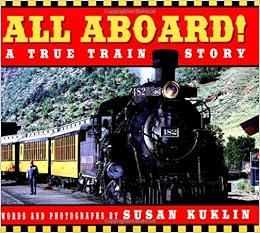
Kuklin, S. (2003). All aboard: a true train story. New York: Orchard Books. 

This book is also informational about trains which is good for C.K. and his interest in trains. 

                                              
Doodler, T. (2010). Bear in underwear. Maplewood, NJ: Blue Apple Books.

This book just looks like an all around silly book that I think many preschoolers will enjoy. You would not see a bear wearing underwear in real life so why is this bear wearing one. Children will be curious to find out why he is wearing the underwear. 

                                              
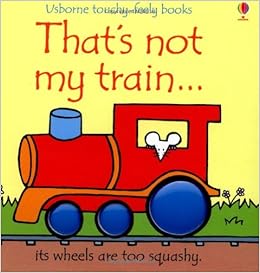
Watt, F. & Well, R. (2008). That's not my train. Usborne Books.

A book C.K. mentions his mom read to him at home is That's Not My Dinosaur, so I thought he may also enjoy the book That's Not My Train because he enjoys trains and it is a touchy-feely book like the one he read at home. 

                                                   
Pilkey, D. (1997). The adventures of captain underpants: an epic novel. New York: Blue Sky Press.

This last book I suggested for C.K. when he gets older and his reading level is high. Captain Underpants is a really silly book and is loved by many. It is much like a comic book and an easy read for beginner readers. 

Tuesday, September 15, 2015

Chapter 1 Blog: Learning About Story and Literature


In chapter one, there were three things that stuck out to me the most: a word, a phrase, and a sentence. The word that popped up the most as I was reading was the word: 

In the text it says, “Children’s books are literature and literature is not written to teach something, but to illuminate what it means to be human and to make accessible the most fundamental experiences of life – love, hope, loneliness, despair, fear, and belonging. It is the imaginative shaping of experience and thought into the forms and structures of language. Children read literature to experience life, and their experiences inside the world of a story challenge them to think in new ways about their lives and world” (Lynch-Brown, Short, Tomlinson, 2014, page 4). 
I think the word literature reflects the meaning of this chapter for me because the chapter is mostly about what literature means and how children view and understand literature. Literature is everywhere that we go and everything that we see. Like the text says, it not only teaches something, but it shapes our lives. It gives an appreciation for reading. Literature shows us how to love, how to play fair, not to be afraid, that life is too short and about making quick decisions, and many other life lessons. If children were not exposed to literature, they would not enjoy reading and they would not understand their purpose in life. Every day I am always reading a children’s literature book to my preschool students and they apply the story to everyday life and what they would do if they were in the situation. This challenges them to think.   
The phrase that stood out to me the most in the text and reflects the meaning of this chapter is change lives for the better” (Lynch-Brown, Short, Tomlinson, 2014, page 11). 
I found this phrase to be interesting because literature changes lives for the better. It helps children develop and expand their vocabulary which will someday help them to succeed into getting a job in the real word. It is almost hard to live without literature. We need it in our everyday lives. It makes life easier and better. So “changes lives for the better” reflects the word literature in this chapter because literature is important for life.

The sentence that I found most reflected the meaning of the chapter and also reflected the meaning in my life from my own experiences is “Our assumption is that high school and college students stop reading for personal purposes because reading becomes associated with textbooks and school work – hardly motivating reading!” (Lynch-Brown, Short, Tomlinson, 2014, page 10). I thought this sentence was the most important to me in the chapter because I can relate to it. I realized that I stopped reading a lot of books personally on my own time because I feel I just do not have the time to pick up a book and enjoy a good read because I am too busy reading textbooks for school. Every week is another chapter in the textbook I have to read for school and there is no free time for me to read on my own. I think this applies to others as well because they become unmotivated to read which means there is a risk of reading delays and wanting to read voluntarily is at risk.


References
Lynch-Brown, C., Short, K., & Tomlinson, C. (2014). Essentials of children’s literature. Upper Saddle River, NJ: Pearson Education.